Showing posts with label Herbs. Show all posts

Thursday, 25 February 2016

Eating Healthy With Herbs and Spices


Look in your spice rack for some powerful powders that have been compared to some of today's cancer-fighting drugs. Healing herbs and smart spices have been valued for ages, both for their flavor, color, and medicinal properties. These plants and their phytonutrients have left an impact on cultures and beliefs (one was said to prevent nightmares; another was an object of worship). You can add these herbs and spices to your dishes to help fight and prevent breast cancer. Each herb and spice is listed below, with its anticancer compound.

"Let your food be your medicine, and your medicine be your food." – Hippocrates

Turmeric (Curcumin)

Turmeric is a yellow powder made from the plant Curcuma longa, and is a venerable ingredient in yellow curry. Most Asian or Middle Eastern kitchens will have a supply of turmeric on hand. Turmeric has been used in Ayurvedic medicine for about 5,000 years.

Very solid science shows that curcumin has antioxidant, anti-inflammatory, antiviral, antibacterial, antifungal, and anticancer powers, and thus has potential in helping fight a host of malignant diseases. In one lab study, breast cancer tumors and metastasis were reduced with a dietary dose of curcumin, even on tumors that resisted treatment with Taxol.

When mixed with black pepper and olive oil, your body absorbs curcumin two thousand times better than if you take turmeric capsules.


Labiates - Leafy Herbs (Terpene)

Labiates include mint, thyme, marjoram, oregano, basil, which are often used as garnish or flavoring for vegetable and meat dishes. Fresh leaves of these herbs have a noticeable fragrance, thanks to fatty acids of terpenes, a substance that works on tumors by encouraging cancer cells to kill themselves.

In England, during the 1500s, it was thought that putting clippings of rosemary under your bed would keep away bad dreams. Modern research found that when a rosemary terpene –- carnosol -- was given along with Adriamycin (doxorubicin) and Velban (vinblastine) chemotherapy, breast cancer cells began to absorb the chemo that they had previously resisted. The terpene helped to reduce the spread of cancer cells, or caused their death.

Apiums (Apigenine)

Apiums include parsley (apium petroselinum) and wild celery (apium graveolens), which often show up in salads and stews, giving color and texture to meat and vegetables dishes. Parsley, now most commonly seen sprinkled as a garnish, was used in ancient Greece to crown victors at the Isthmian games; it was also thought to have power to cure people and animals from the effects of poison. Maybe it got its reputation because it can almost vanquish the powerful fragrance of garlic.

Parsley contains apigenine, an oil that can inhibit angiogenesis -- the growth of blood vessels that supply tumors with nutrients. When apigenine from parsley or celery cuts off the blood supply of a tumor, it acts similar to the targeted biologic drug Avastin.

Alliums (Diallyl disulfide)

Garlic, onions, leeks, shallots, and chives are all part of the allium family. Alliums are so fragrant that ancient Egyptians may have thought onions, buried with mummies, would revive the dead. Onions and garlic are often cooked with other foods. When eaten this way, they help lower your insulin peaks. This effect can help prevent uncontrolled cell growth and inflammation, which can leave you vulnerable to cancer. In lab studies, natural diallyl disulfide was more effective than 5-Fu fluorouracil and cyclophosphamide at causing cancer cell suicide. Alliums also have quercetin and allicin, strong antioxidants and anti-inflammatory flavonoids, which may prevent the formation of carcinogens and initiate cancer cell death.


Cinnamon (Proanthocyanidin)

Cinnamon is used in stick or powdered form, both of which are derived from cinnamon bark. This aromatic spice finds its way into baked goods as well as meat marinades. The Imperial Romans burned cinnamon at royal funerals and considered it a sacred plant.

Phenloic polymers in cinnamon are beneficial for type 2 diabetes and cardiovascular diseases. Cinnamon can reduce your blood sugar and LDL cholesterol levels, as well as increase your insulin levels. Proanthocyanidins, a type of flavonoids in cinnamon, have potent antioxidant capability and may be able to inhibit tumor growth by starving the cancer cells. These special flavonoids may also block the formation of nitrosamines, a carcinogen that can damage the DNA in your breast tissue.


Ginger (Gingerol)


Ginger is a rhizome that is related to turmeric. Ground ginger has been used in western and European cooking since the time of the Roman Empire; in Asia and India, it is more commonly used fresh and used as a natural treatment for nausea and motion-sickness. In either form, ginger has a hot, pungent taste that works as a good contrast to sweet flavors in desserts and main dishes.
Gingerol has anti-bacterial, anti-inflammatory, and anti-tumor powers. In some studies, gingerol inhibited tumor angiogenesis (formation of blood vessels leading to the tumor), and seemed to reduce metastasis of cancer cells. Gingerol also acts as an antioxidant, scavenging free radicals that might otherwise cause cell damage.


Herbs Are Enhancement, Not Replacement, for Treatment

There are many more herbs and spices that contain anticarcinogenic compounds. These are just a few that may be in your everyday spice rack, or growing in your garden. While they do have powerful effects on your health, don't take these instead of standard treatments for breast cancer. You will get the most benefit from fresh herbs and spices, rather than nutritional supplements. Let your doctor know if you start using larger than average amounts of these plants, since that may affect the effectiveness of your treatment or pose related side effects.


Source by : http://breastcancer.about.com/od/cancerfightingfoods/tp/herbs_spices.htm

Tuesday, 23 February 2016

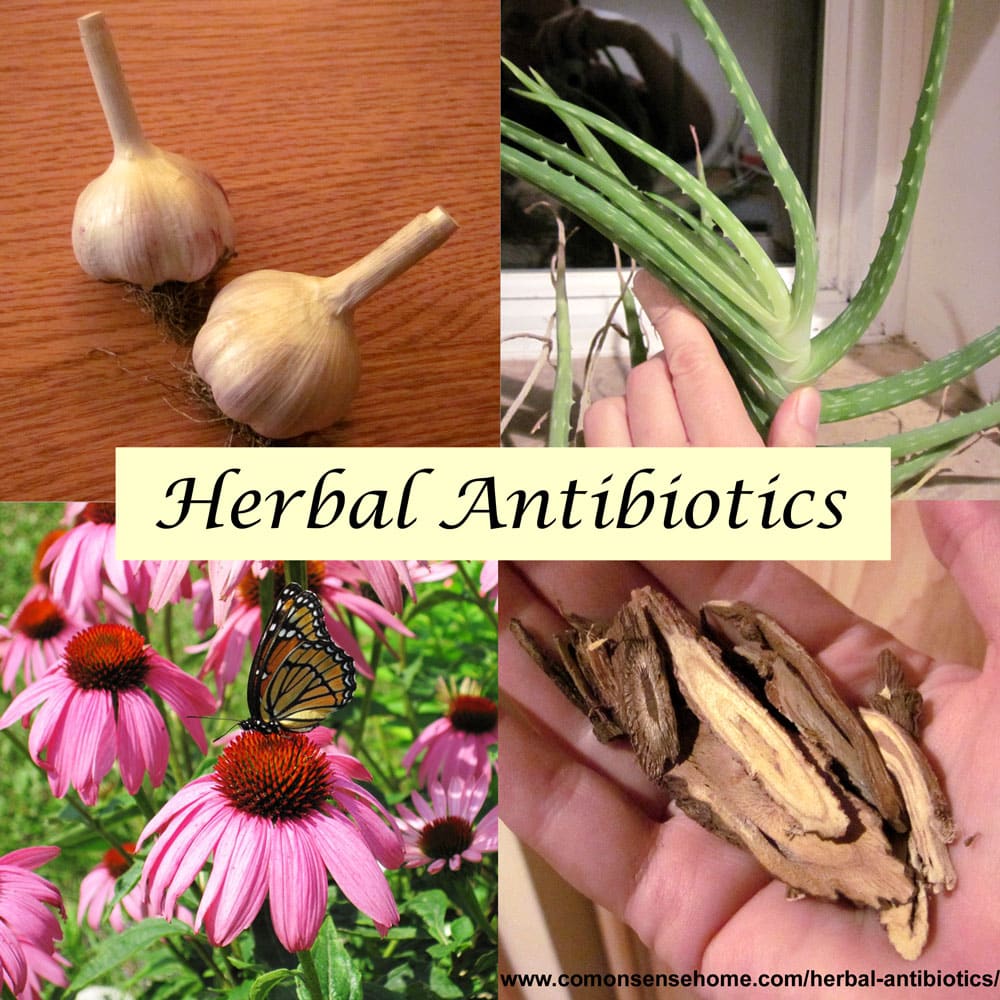
Herbal Antibiotics


Herbal antibiotics have long been used by herbal healers to ward off colds and flu, clear infections and speed wound healing.  Now, they may be moving back into the mainstream as an alternative for bacteria that have become resistant to synthetic antibiotics.  This post is based on the book “Herbal Antibiotics” by Stephen Harrod Buhner, and related materials.  We’ll start with some background information and then discuss antibiotic herbs and their use.

Note:  Not all bacteria are harmful – many are essential to our health and well-being.  Always exercise caution with the use of herbal antibiotics, just as you would with pharmaceutical antibiotics.  In food doses, they are generally benign, but in therapeutic doses they can have side effects just like any medication.

What is an antibiotic?

MedicineNet.com defines an antibiotic as:

A drug used to treat infections caused by bacteria and other microorganisms. Originally, an antibiotic was a substance produced by one microorganism that selectively inhibits the growth of another. Synthetic antibiotics, usually chemically related to natural antibiotics, have since been produced that accomplish comparable tasks.

Most of us think of antibiotics as liquid or pills you pick up at the pharmacy, but these compounds were originally developed from naturally occurring sources.  Plants have antibiotic substances serving a beneficial roll around their root systems.  Bacteriophages are viruses that infect bacteria.  (Everything has something that wants to eat it.)  Many common foods and herbs (and some not so common ones) act as antibiotics, such as honey, garlic, onions, licorice root, ginger, sage and many others.

How do bacteria become antibiotic resistant?
Antibiotic resistance is a genetic trait, like brown hair or green eyes, but unlike these traits, antibiotic resistance transfers very quickly between one bacteria and another.  Somehow (and as I understand it, scientists are still trying to figure this out) bacteria communicate with each other extremely rapidly, and through this communication they are able to transfer survival traits.

The TED talk below by Bonnie Bassler gives examples of some of the rapid communication abilities of bacteria.
In a study by Dr. Stuart Levy and his colleagues, they found that introducing antibiotics into chicken feed very quickly promoted the spread of antibiotic resistant bacteria in the chickens’ intestinal tracts, as well as the intestinal tracts of the people working with the chickens.  The chickens’ guts changed within a week, the farm workers in 3-6 months.  Further, the bacteria sampled were not only resistant to tetracycline (the antibiotic used), but several other commercial antibiotics – they had learned and adapted.  (Personally, this freaks me out.) 
The good news – after they stopped using the antibiotic laced feed for six months, no detectable levels of tectracycline resistant organisms were found in the farm workers. Read more about this study at “The Spread of Antibiotic Resistant Bacteria from Chickens to Farmers“.

How are herbal antibiotics different from pharmaceutical antibiotics?
Many pharmaceutical antibiotics are isolated chemical constituents.  They are one compound/one chemical – penicillin is penicillin, tetracycline is tetracycline and so on.  This makes them easier for bacteria to adapt to and counteract.  In contrast, herbs are much more complicated.  Garlic has over 33 sulfur compounds, 17 amino acids and a dozen other compounds.  Yarrow has over 120 identified compounds.  (It makes me look at my herbs with a new appreciation.)  In plants, the whole appears to be more than the sum of its parts.  The different compounds work together, often to produce better than expected results.  (See Chapter 2 of Herbal Antibiotics for a more detailed explanation.)

Top 15 Antibiotic Herbs
Stephen lists the following as his top 15 antibiotic herbs.  I might also add cinnamon (perhaps it’s been added in his second edition, which I haven’t had the pleasure of reading yet).

Acacia
Aloe
Cryptolepsis
Echinacea
Eucalyptus
Garlic
Ginger
Goldenseal
Grapefruit Seed Extract
Honey
Juniper
Licorice
Sage
Usnea
Wormwood
The use of each of these is detailed in the book.  I’ll share a few that I use regularly.

Aloe
Aloe vera is active against Staphylococcus aureus, Pseudomonos aeruginosa, and herpes simplex virus type 1 and type 2.  Aloe and honey are two of the most effective treatments for burn victims when applied externally to speed wound healing and prevent infection.  Aloe is used simply by slicing open the leaves of the fresh plant to get at the sap and applying the aloe gel to the wound or burn until well covered, repeating as necessary.  (Read more about medicinal use of aloe.)

Garlic
Garlic is active against Tuberculosis, Shigell dysenteriae, Staphylococcus aureus, Pseudomonos aeruginosa, Candida albicans, Escherichia coli (E.coli), Streptococcus spp., Salmonella spp., Campylobacter spp., Protues merbilis, herpes simplex, influenza B, HIV and many others.

Garlic make be taken fresh (as juice or as cloves), in capsules, as tincture, or in food.  Start with small doses and gradually increase.  Raw garlic may cause stomach upset and even induce vomiting, so be careful.  Small, frequent doses are generally easier to take than large doses (1/4 to  teaspoon juice as needed).  Capsules may be better tolerated and easier to take.  Ample garlic is food is also helpful.  Watch out for garlic and blood thinning medication.

Echinacea (Echinacea augustifolia, E. purpurea)
Echinacea is active against Staphylococcus aureus, Streptococcus spp., mycobacterium (tuberculosis), abnormal cells (direct application necessary).  Stephen particularly recommends it for abnormal pap smears, strep throat, and very early onset of colds and flus.  For strep throat and heading off colds and flus, he recommends the use of echinacea tincture, 30 drops (full dropper) each hour.  I have also had success fighting off a cold with a steady stream of echinacea tea.

Licorice (Glycyrrhiza glabra)
Licorice is active against malaria, tuberculosis, Bacillis subtilis, Staphylococcus aureus, Streptococcus sobrinus, S. mutans, Salmonella typhimurium, Escherichia coli, Candida albicans, Vibrio cholera, Trichophyton mentagrophytes, T. rubrum, Toxocara canis.

Licorice is a powerful immune system stimulant and antibiotic, and works well with other herbs.  It does have side effects, especially with overuse.  The author notes, ” I have found in practice that the use of the whole root does in fact produce fewer side effects than the extracts. However, some of the same side effects still occur: higher blood pressure, water retention. These occur with less frequency and generally occur in those of middle age – i.e. those who have gone through menopause. I have used licorice for over 20 years now and find the herb moving more and more into the drug category for me due to its potency. Should be used with caution in those with high blood pressure.”

I’ve used licorice root in tea, and as part of this herbal sore throat syrup.  Stephen  advises a tea using  1/2 to 1 teaspoon powdered licorice in 8 ounces of water, steeped for 15 minutes and drained, up to three times per day.

There is much, much more to learn about herbal antibiotics, but I just wanted to give you a brief overview and let you know that herbs can be effective remedies, sometimes even for infections that don’t respond to “standard” treatments.  Always exercise caution when using herbs as medicine, and be doubly careful if you are on any prescription medication.

Turmeric: The All-In-One Natural Super Drug


Aside from the holistic health community, Western medical practitioners have only recently come on board in recognizing the benefits of turmeric.
Turmeric, an orange-colored spice imported from India, is part the ginger family and has been a staple in Middle Eastern and Southeast Asian cooking for thousands of years.
In addition, ayurvedic and Chinese medicines utilize turmeric to clear infections and inflammations on the inside and outside of the body. But beyond the holistic health community, Western medical practitioners have only recently come on board in recognizing the benefits of turmeric.

Blocking cancer:


Doctors at UCLA recently found that curcumin, the main component in turmeric, appeared to block an enzyme that promotes the growth of head and neck cancer.
In that study, 21 subjects with head and neck cancers chewed two tablets containing 1,000 milligrams of curcumin.  An independent lab in Maryland evaluated the results and found that the cancer-promoting enzymes in the patients’ mouths were inhibited by the curcumin and thus prevented from advancing the spread of the malignant cells.

Powerful antioxidant:


The University of Maryland’s Medical Center also states that turmeric’s powerful antioxidant properties fight cancer-causing free radicals, reducing or preventing some of the damage they can cause.
While more research is necessary, early studies have indicated that curcumin may help prevent or treat several types of cancer including prostate, skin and colon.

Potent anti-inflammatory:


Dr. Randy J. Horowitz, the medical director of the Arizona Center for Integrative Medicine and an assistant professor of clinical medicine at the University of Arizona College of Medicine in Tucson, wrote a paper for the American Academy of Pain Management in which he discussed the health benefits of turmeric.
“Turmeric is one of the most potent natural anti-inflammatories available,” Horwitz states in the paper.
He went on to cite a 2006 University of Arizona study  that examined the effect of turmeric on rats with injected rheumatoid arthritis. According to Horwitz, pretreatment with turmeric completely inhibited the onset of rheumatoid arthritis in the rats. In addition, the study found that using turmeric for pre-existing rheumatoid arthritis resulted in a significant reduction of symptoms.

“Raw is best”:


Natalie Kling, a Los Angeles-based nutritionist, says she first learned about the benefits of turmeric while getting her degree from the Natural Healing Institute of Neuropathy. “As an anti-inflammatory, antioxidant and antiseptic, it’s a very powerful plant,” she says.
Kling recommends it to clients for joint pain and says that when taken as a supplement, it helps quickly. She advises adding turmeric to food whenever possible and offers these easy tips. “Raw is best,” she said. “Sprinkling it on vegetables or mixing it into dressings is quick and effective.”
If you do cook it, make sure to use a small amount of healthy fat like healthy coconut oil to maximize flavor.  Kling also recommends rubbing turmeric on meat and putting it into curries and soups.
“It’s inexpensive, mild in taste, and benefits every system in the body,” Kling says. “Adding this powerful plant to your diet is one of the best things you can do for long term health.”


Source by : http://www.curejoy.com/content/turmeric-the-all-in-one-natural-super-drug/